Editorial: Cuts and Corporations Conference issue

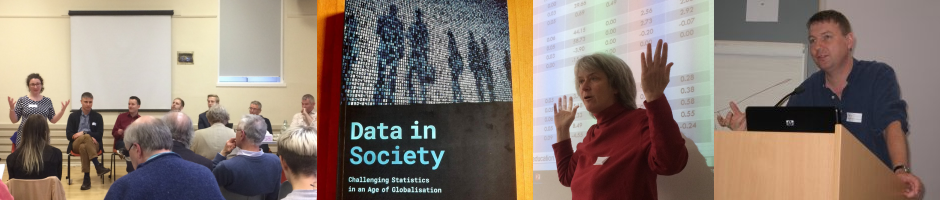
The Radical Statistics Annual Conference 2011, held at the newly opened Heart Centre in Leeds was very successful with a record attendance. There was a full programme of papers that focussed on the twin themes of the ongoing effects of the coalition’s financial cuts and the increasing influence of corporations. This issue [104] includes four of these conference presentations and two workshops based on the presentations.

One issue that has been a thorn in the side of many scientists at least since Simon Singh published his book on homeopathy (co-authored with Edzard Ernst) is litigation in the area of science criticism. Dr Peter Wilmshurst presented a harrowing and yet very humorous account of what began with his participation as principal cardiologist in a sponsored clinical trail. This involvement led to severe and painful disruption of his career and family life over three years, caused by extended legal action. His commitment to professional integrity left him victim to UK libel laws, and his case is not alone. There are other examples of scientists being sued for libel for scientific presentations and research publications. This should be a concern for scientists, statisticians and the public, restricting as it does scientific communication.

Speaking before Dr Wilmshurst, Stuart Parkinson, Executive Director Scientists for Global Responsibility, presented an analysis that anticipated the experiences reported by Peter Wilmshurst. He argued that, while links are increasing between business and science and
technology, there is growing evidence that the science commercialisation agenda brings with it a wide range of detrimental effects, including bias, conflicts of interest, a narrowing of the research agenda, and misrepresentation of research results. All of these can reduce the reliability of statistics based on scientific research. Stuart permits the reprint of an article dated 2009 presenting evidence for these effects across five sectors:  pharmaceuticals; tobacco; military/defence; oil and gas; and biotechnology. Recommendations are made for improving the openness, independence and reliability of
academic research.

The opening presentation was given by Jay Ginn and Susan Himmelweit. With illustrative charts they refuted the government’s claim that its measures to reduce the financial-sector-created deficit are designed to be ‘fair’, that is distributing the pain across the whole of society. Vulnerable groups were shown to be suffering the worst effects of the package of cuts and tax changes, particularly older people and women. The authors’ paper ‘Unkindest Cuts: the impact on older people’ has already been published in Radical Statistics #103;
this was covered in the presentation. The paper printed here covers the additional material without duplication.

Alan Franco spoke on his article published in #103, ‘From Witney to Wigan: How national changes to welfare benefit rules have a differential impact on local communities’. He presented further analysis that demonstrated that while significant cuts in the levels of welfare benefits and tax credits are typically portrayed as ‘targeting help on
those most in need’, a geographical analysis of their differential impact on communities suggests that significant disinvestment in Britain’s most impecunious communities is underway. Alan’s data can be retrieved from the website, but no paper is included.

A similar message was conveyed in Howard Reed’s presentation that showed that the poorer you are the more the cuts bite and vice versa, which is the opposite of what the government has claimed about them. The work carried out for the TUC by Horton, T. and Reed, H. ‘Where the Money Goes: How we benefit from public services’, cited by Ginn &
Himmelweit, is an invaluable source for evidence. Permission has been given to summarise Howard’s presentation and this will appear in Part II #105.

Victoria Johnson’s presentation on the redefinition of wealth and progress argued that it is impossible to have a growth economy indefinitely. She began with a thought experiment on a hamster eating and thereby growing – which if allowed to continue – would eventually outstrip the world’s food supply for it. A real experiment of this kind was carried out in the mid-20th century by an experimental psychologist, Teitelbaum. Upon ablation of a rat’s ventro-medial hypothalamus, he discovered that the rat ate until it became so large that it was unable to move to obtain food and eventually died of starvation. Both experiments, one conceptual the other real, show that indefinite growth leads to a community exceeding the carrying capacity of its environment with catastrophic consequences. A further upshot of developing a new attitude to growth is the necessity of reassessing the implications of population growth and its inextricable relationship to the carrying capacity of the earth.

At the end of the afternoon we broke up into groups to discuss what activities could be conducted between AGMs. Two of the workshops are presented here. One, led by Women’s Budget Group, considered the effectiveness of equality impact assessments (EIAs) of government policy on gender and other inequalities. The other, led by Dr Wilmshurst, examined how libel law operates in the UK and the implications. The workshop concluded with a call for support for the Libel Reform Campaign petition.

The editors hope to trace a report of the third workshop ‘Cuts to Government Social Research Budgets and Ongoing Projects since May 2010: Increasing the Evidence Deficit?’. This was led by Simon Tanner. Please let us know if you attended that one. Hopefully it could be reported in Part II #105 together with full records from the Annual
General Meeting that was held during the lunch break.

In addition to conference papers #104 includes several other items that have accumulated during the delay in publication. These include Jane Galbraith’s response to Danny Dorling’s reply in #103 and articles by Ecob, Marchant and Noble. Russell Ecob proposes an alternative proportional representation voting system and Paul Marchant questions whether new street lighting schemes have reduced crime in London. Hugh Noble’s commentary is designed to raise the level of discussion on the ‘Spirit Level’.
The Troika are given the last word reporting on recent decisions and offering promotional material for Radical Statistics.

Larry Brownstein
Alastair Greig
Janet Shapiro
editors@radstats.org.uk

Call for Submissions to Radical Statistics: the Riots

Issue #106 of Radical Statistics will focus on the 2011 England Riots. We are actively approaching individuals to submit analytical work for the issue. Articles can range in size, we actively encourage the use of empirical data, but also encourage short communications, letters, and full length articles.

The editors of Radical Statistics are looking for a range of submissions which will help analyse the response, or pretext, to the riots. A simple study on the convictions/sentencing of those participating would be very welcome indeed, but we are interested in receiving a range of submissions. If you would be interested, or know of someone who might be, please contact editors@radstats.org.uk.

See the Editor’s page on the website for details about submissions.

– Alastair Greig

General Lifestyle (Household) Survey ends

On 30th June, ONS announced that it the General Lifestyle Survey (previously the General Household Survey) will be discontinued from January 2012, with some questions transferred to other surveys.

In reponse to consultation, the ONS states:

” ONS welcomes all of the responses received and notes the concerns. These responses will be taken into consideration during the next steps of this project. Given the need to harmonise UK and EU poverty indicators, and ensure efficient data collection, we propose that the GLF ceases to run in its current form from January 2012.
Statistics on Income and Living Conditions required by European law (EU-SILC) will be collected via the Family Resources Survey (FRS) with a standalone survey providing the longitudinal SILC element. GLF questions not covered by EU-SILC will be collected using a separate survey, subject to continued funding for non-EU-SILC variables. Over the next six months, ONS will explore the exact format for this survey to best meet users’ needs. Details will be made available later in the year.”

Full details are available from the ONS website in the ‘Response to the future of the GLF survey consultation’ http://www.ons.gov.uk/about/consultations/closed-consultations/the-future-of-the-glf-survey/

UK Statistics Authority insists on doing its job

A meeting of Learned Societies heard that the UK Statistics Authority had found that the government was breaking its own code of practice on consultation, and was not willing to inform the Authority of proposed changes to official statistics; The Authority is required by law to advise on the impact of changes in statistical production. The same meeting heard that government departments are doing their own thing when implementing cuts, some cutting outputs with minimal or no public consultaton, and others involving users in extensive reviews. Not all are sharing their plans with the head of the government’s statistical profession, the National Statistician. 

The Chair of the UK Statistics Authority Sir Michael Scholar expressed disappointment in a letter to Minister Francis Maude last October 2010 that the government was unwilling to allow the Authroity to advise on the impact of proposed changes to statistics, listing 17 examples where the statistics of one government department informed the work of others.

The UK Statistics Authority issued the first of its Statistical Expenditure reports, in which it investigates “any changes to departmental statistical work programmes where there are questions about whether user needs have been fully considered; where adequate consultation may not have been carried out; where the effects on other departments or other statistical series may not have been taken into account; or on the rationale underpinning the proposals more generally.”

The first Statistical Expenditure report is attached to a letter to Eric Pickles on 8th April 2011, the Minister for Communities and Local Government, which demands that the government responds to the needs expressed in consultation over the Citizenship Survey. The survey has been cut completely, with fieldwork ending on March 31st 2011, in spite of users’ clear identification of its importance in ‘providing  evidence on the Big Society, extremism, cohesion and integration, fairness in the criminal justice system, discrimination, the impact of immigration, volunteering, well-being, and many other issues’.

Scottish Surveys reduced

A review of Scotland’s surveys, started in 2008, has turned into a cost-cutting exercise resulting in greater efficiency, fewer outputs and less precision. The full Scottish Household Survey Review is not yet published, but the Scottish House Conditions Survey will become a module within the general Scottish Household Survey. The Scottish Health Survey sample will be reduced by one third and will no longer include a nurse’s visit. The Scottish Crime and Justice Survey will be reduced in size, no longer providing data for local authority areas, and be carried out each two years rather than annually.

On the brighter side, the three surveys will be harmonised and from 2013 pooled data will provide some estimates for smaller populations than previously possible.

The changes will take place from the end of 2012. Summary by the Scottish Government.

Calling all NOMIS users: save your data

The UK Office for National Statistics are consulting on alternatives to NOMIS. All current NOMIS users may consider and respond to the ONS consultation document regarding access to Labour Market and related statistics.

The plans are unlikely to satisfy any user interested in geographic areas other than the normal administrative and electoral hierarchy, or using information for very detailed variable definitions, or a wide range of options. The proposals are based on the common denominator of current uses. Data that cannot be provided for all local authorities will not be provided for any (out goes detailed analysis for large authorities). Variable values will be pre-banded (out go unusual age-groups even if they are wide ones). Such needs would be met by the ONS Virtual Data Laboratories, which are accessible to approved researchers, on approved projects, at ONS sites.

The ONS Data Explorer is proposed to meet many users’ needs. As explained further in the document, some needs will not be met by the ONS Data Explorer, and ONS needs to hear “what the importance of this data is to users, how they make use of it and the impact on the general public. It is these users that ONS particularly want to hear from to better understand this usage of the more detailed data currently available.”

Responses should be sent by 20 May 2011 to Bob.Watson@ons.gov.uk

After the Radstats conference: photos, data, presentations

AGM-Leeds

Radstats members read reports at the annual general meeting.

On Saturday 26th of March 2011, exactly one month before the March Against the Cuts in London, around 70 people gathered at the Heart Centre in Leeds for the Radical Statistics Group’s annual conference, AGM and workshops, galvanised by the conference theme, ‘Cuts and Corporations’.

Since then, most of the speakers have provided presentations for the website. Also, Alan Franco provided data files detailing the local area data he presented in “From Witney to Wigan: How national changes to welfare benefit rules have a differential impact on local communities.”

The spreadsheets include compiled comparisons by local authorities and by parliamentary constituencies of the impact of changes in the Disability Living Allowance, Tax Credit Reductions, and Child Benefit.

We also have some links to photos from our facebook account.

Check it out at https://www.radstats.org.uk/conf2011/index.htm

UK General Lifestyles Survey, formerly GHS, under the axe

Following the General Lifestyles Survey (GLF) User Meeting hosted by the Economic and Social Datasets Service in March, see www.ccsr.ac.uk/esds/events/2011-03-23/glfnotes.doc for a note of the ONS presentation regarding the future of the survey.

In summary:

– ONS confirmed that the FRS will be the vehicle for the EUSILC questions (currently on GLF) from 2012 onwards

– The NHS Information Centre are proposing to withdraw funding for the 2011 GLF

– ONS propose replacing the GLF from 2012 with a new survey based on the Opinions survey

Given this new information, you may wish to reply to the GLF consultation document (even if you’ve already done so previously):

www.ons.gov.uk/about/consultations/open-consultations/eusilc-integration-into-frs/

(thanks to ESDS for this information)

General Household Survey – saveable?

The UK General Household Survey (with the General Lifestyle Survey) will be cut if users do not express an over-riding need for it, according to the Economic and Social Data Service.

Consultation by the ONS lasts until 6th May, respond as directed here.

The Economic and Social Data Service is running a day workshop on the survey on March 23rd at the Royal Statistical Society in London, including an opportunity to express views on its future. Book now here.