Here’s a sneak preview of the Radstats 2014 conference programme, themed “Is Britain Pulling Apart?” all to be confirmed by the organisers.
Join us in Manchester for the weekend of 8th March!
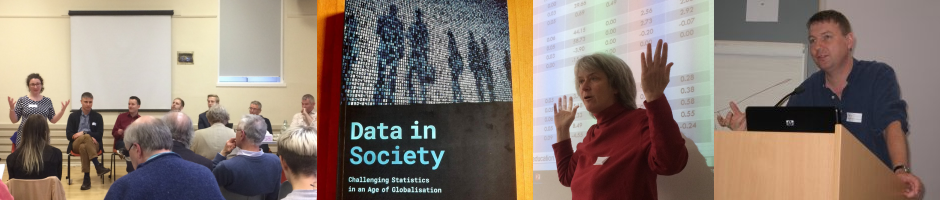
Here’s a sneak preview of the Radstats 2014 conference programme, themed “Is Britain Pulling Apart?” all to be confirmed by the organisers.
Join us in Manchester for the weekend of 8th March!
This issue of Radical Statistics begins with three pieces which provide an overview of the value of the UK census and the damage that its potential cancellation will wreak. These articles highlight the disquiet that academics, policy makers and the public should feel about government plans for 2021 and beyond. In the first piece Danny Dorling highlights some of the surprises that have emerged from the 2011 census and suggests that only a government that does not care about its citizens would favour a plan which effectively makes it impossible to find out about them in the future (about where people live, about their needs, about their ages… etc). In the second piece Paul Norman makes the argument for the census and for small area data in particular. He ends with an appeal to everyone who has used (or is intending on using) census data to contribute their experience to the ‘business case’ for retention. The third piece, by Emma Stevens, is based on research conducted for an undergraduate dissertation. Emma surveyed human geographers about their use of the census and about how the proposed changes will affect their work. This article shows that the arguments made by Danny Dorling and Paul Norman are echoed by human geographers from across the UK.
In the next section are three very diverse articles. The first, by Lucy Borland, provides shocking data on how changes in the regulation of lead in water in the UK (whereby 99th centile data is treated as a ‘maximum’) may mean that dangerous contamination is going unnoticed. Using equivalent data from Northern Ireland Lucy highlights the importance of absolute values where health is an issue. She also raises serious doubts about the effectiveness of tap-water sampling practices.
The next article, by Robert Grant, provides a timely overview of the history and potential of graphical representations. Robert shows that graphics can provide a fruitful way to make and disseminate radical arguments where these depend on statistical data. Perhaps most helpfully, he provides a wealth of practical suggestions, which will be invaluable for anyone toying with the prospect of learning more about data visualisation.
In the last article, Jonathan Bradshaw has written up his Radical Statistics conference presentation from February 2012. In this he uses York as a means for thinking about inequality and poverty and the ways in which these are measured.
The issue concludes with David Elliman’s enthusiastic review of The Geek Manifesto, Larry Brownstein’s comment on an issue raised in this book (and the review) – assessing tests of scientific competence, and finally Russell Ecob’s brief summary of the Radstats conference discussion on whether a fair voting system is possible, and what it would look like.
We hope that you enjoy, or at least are stimulated by, the articles in this issue. If you think that you have something to say that would be of interest to Radical Statistics readers, get in touch. We are always keen to receive articles, news stories or book reviews. If you are unsure about whether something is suitable, drop us an email and check.
Rachel Lara Cohen
Alastair Greig
Larry Brownstein
Email: editors @ radstats.org.uk
20 February, 2013
This Saturday, a hundred experts will come to York to discuss and debate issues of inequality and poverty in the world today – and yesterday. For over a century, York has been at the centre of this debate, since Seebohm Rowntree completed his pathbreaking poverty survey in 1900.
Rowntree’s story will be addressed by Professor Jonathan Bradshaw from York University in the first session at this weekend’s event, which is at the Priory Street Centre in central York. This session is also co-sponsored by the Yorkshire Philosophical Society, and will provide a launch for the new book on the Rowntree family by local author Paul Chrystal (to be confirmed).
Another York speaker is Professor Richard Wilkinson, whose celebrated book ‘The Spirit Level’ argued why greater equality is better for everyone. The conference organiser, John Bibby, said, “This will be an argument accepted by most of the attendees at this conference, which is organised by Radical Statistics, a group of left-wingers interested in applications of statistical data”.
Other sessions will discuss inequality in India, the 2011 population census in the UK and will debate whether the 2021 census should be cancelled.The theme of the final speaker, Stewart Lansley, will be “The Costs of Inequality”, on which he has written a very well-received book.
You can follow the conference live on Twitter, hashtag #radstats. For full information see https://www.radstats.org.uk/conference/york2013/
———-END———–
This issue of Radical Statistics comes out of the February 2012 Radical Statistics Conference, which was held at the British Library in London. The conference focused on the Mis-Measurement of Health and Wealth and was the best ever attended Radical Statistics conference. Five of the eight presentations given at the conference are collected here (we hope to include the remaining three presentations in some form in a future issue of Radical Statistics).1 As a set, the papers published here are very much in the radical statistics tradition: they do not simply critique mainstream methods of measuring, but also reveal the social necessity of challenging such measures and begin to propose alternatives.
The issue begins with Howard Reed’s critique of the ways that UK debt statistics are constructed and interpreted. He unpicks the UK Coalition Government’s ‘maxed-out credit card’ explanation of current government finances, and demonstrates the links between this reading of the data and the ‘austerity’ policies which are responsible for slowing growth in GDP (and therefore exacerbating the debt/GDP ratio). Howard also points out that contrary to popular opinion, the previous Labour government’s real spending was very much in line with historical precedent. Continue reading
The following is a reprint of the Editorial in the special issue of Radical Statistics: Riotstats.
The August disturbances, we are led to believe, brought out the “best” and “worst” of contemporary British society. It is not difficult to find a range of views on the causes and the most appropriate response to the rioting that followed the death of Mark Duggan in Tottenham, London, in the summer of 2011. In this issue of Radical Statistics a couple of articles question the statistical basis for making sweeping empirical claims about the riots. We also have a debate about causes of the riots, which mirrors the one which has taken place in the public domain. Ultimately, however, the statistics do not provide any simple answers, and it remains up to individual readers to decide upon the most compelling approach to understanding the cause and effect of these riots and to contribute to the analysis and dissemination of our understanding of these events.
Roger Ball and John Drury provide, in time-honored Radical Statistics style, a critical analysis of the way in which data have been used, particularly in the media and by politicians, to support various ideological interpretations of the disturbances. The article refrains from putting forward the authors’ own account of the causes of the riots, while providing a convincing account of the way in which dubious statistical evidence appears to have been used to promote narrow sectional and political interests.
Carly Lightowlers and Jon Shute, using the Index of Multiple Deprivation (IMD) and Manchester court records, show that individuals from deprived neighbourhoods were disproportionately represented in the criminal justice system as a result of the rioting. To Carly and Jon, the dominant narratives do “not acknowledge the structural roots of the problem or the counter-productivity of ‘get tough’ policies designed largely to appease voter’s concerns”.
Nigel Williams and Nick Cowen argue that the IMD should be disaggregated. Their analysis shows that not all forms of deprivation were associated with areas in which those ‘rioters’ charged were living. Nigel and Nick argue that although crimes were committed in part due to the deprivation-related incentives of the rioters, these would have been averted with a more conspicuous policing deterrent. This aspect of their analysis echoes similarly dispositional interpretations of the riots (Waiton, 2011), which Carly and Jon take to task in a rebuttal. Among other things, they argue that the “rational choice” explanation that Nigel and Nick present inhibits understanding of the myriad of plausible situational factors at work.
Janet Burja and Jenny Pearce recently authored Saturday Night & Sunday Morning: The 2001 Bradford Riot and Beyond, which documents years of work dedicated to making sense of the rioting that occurred in Bradford 10 years ago, and the legacy it has had on the city. Those riots had a particularly striking racial dimension, not entirely dissimilar to the August Riots and in other ways the participants were very similar to the more recent rioters. Janet argues that, in Bradford, local institutions – the police and local government – needed to recognise legitimate grievances of young, deprived individuals. Perhaps to the shock of some Radical Statisticians, Janet argues that statistical analyses have limitations in understanding, and developing responses to, such grievances.*
We are then left with a letter from Brian Quinn, which argues that the Radical Statistics overpopulation working group in its contribution to issue 105, has overlooked the ecological impact of having another child. This is followed by a brief response by the working group in which they address Brian’s points. The issue ends with news from the newly formed Reduced Statistics group.
Changes in Editorship
I would like to thank Janet Shapiro, who is standing down as editor. She had done a miraculous job as editor, and lately had taken on a hefty workload by herself. I am sure I am not alone in thanking her for the marvellous work she has done for Radical Statistics over the years. Rachel Cohen, from the University of Surrey, will take over from her and I am sure all our members look forward to her contributions in the months and years ahead.
Radical Statistics is a not-for-profit membership organisation, and our journal does not aspire to be exclusively academic. We look for contributions from all walks of life and, thanks to our diverse membership, offer a peer review service upon request. If you would
like to help review for the journal or contribute, feel free to contact any of the editors for further information. This year, we are particularly interested in receiving shorter articles from as wide a range of authors as possible. These may highlight the misuse of statistics or promote results, which may not be given a fair hearing in other settings.
References
Waiton, S. (2011). Wellfare Culture: the English Riots and the Collapse
of Authority. Journal of Scottish Affairs, 77, 54-78.
 February is upon us! If you’ve not had the chance, please note that you can still book a space for the Radical Statistics conference to be held on Friday, February 24th 2012 at the British Library Conference Centre, followed by a half-day interactive workshop and AGM on Saturday 25th.
Don’t miss our challenging and engaging programme with talks on:
· Measuring health – history and methods
· Deception in medical research – scientific and regulatory failure
· Deception in financial statistics – how this contributes to financial mayhem
Speakers: Roy Carr-Hill, Val Saunders, Dr Aubrey Blumsohn, Prof. David Healy, Prof. Prem Sikka, Ann Pettifor, Prof. Allyson Pollock & Howard Reed.
Both days will provide a great opportunity to learn and discuss how misleading statistics are used to bolster political preferences and how difficult issues can be demystified with clear statistics.
All interested in research and statistics are welcome – the conference is neither technical nor limited to professional researchers.
Please find the programme and related information at www.radstats.org.uk/conf2012, where you can make your booking now!

by JoSzczepanska on flickr
Radical Statistics Group’s 36 years of activity is to be archived for all to learn from. Documents are being collated with a view to offering them to Wellcome Trust library in London, aiming to have as much as possible online and all catalogued.
Much of our activity is documented in the newsletter, which is available on the Radical Statistics website. But the experience and impact of the group has been much wider than is reflected there, with influence through public meetings, press releases and publicity, support to campaigns and inspiration to individuals and groups in the UK and in other parts of the world.
Send your documents, or memories that you can document for the archive, to admin@radstats.org.uk
Bookings are open for the Radical Statistics conference on February 24th 2012. This year we are hosted by the British Library and have a challenging programme on:
This conference gives an opportunity to learn how misleading statistics are used to bolster political preferences and how difficult issues can be demystified with clear statistics.
All interested in research and statistics are welcome – the conference is neither technical nor limited to professional researchers. There are eight speakers and smaller group sessions, with lunch included.
The Radical Statistics AGM and activity debate will be on Saturday morning February 25th.
Please pass on by email, print and distribute the
A4 flyer advertising the programme, and visit the conference site at www.radstats.org.uk/conf2012, where you can make your booking now!
—
Alistair Cairns, admin@radstats.org.uk
Administrator
Radical Statistics
The judges have chosen the following winners to the Critical Essay Competition which closed in July, 2011 with decisions in Oct 2011.
Two prizes were awarded in the student category. No prizes were awarded in the open category.
The essays will appear in an upcoming issue of Radical Statistics.
Owing to the high standard of the entries this year, a few of the shortlisted entries were given a one-year subscription to Radical Statistics.
Congratulations to the prize winners entries on behalf of the Radical Statistics Troika!
Also, many thanks on behalf of to the contest organisers Alan Marshall and Lee Williamson to our judges Claire Boag, Jay Ginn and Paul Norman for making the 2011 Radstats Critical Essay Competition a success.
—For Immediate Release —
28th October 2011
On the 31st October the world population will pass 7 billion. It is essential that evidence rather than myth informs the challenges and opportunities that such population growth presents.
Population Matters describe themselves as “the leading environmental charity and think-tank in the UK concerned with the impact of population growth on the environment”. The group have promoted their apocalyptic views of population in well funded media campaigns to mark the passing of 7 billion global population.
Radical Statistics’ Population group of UK demographers/population scientists and statisticians, have examined the claims and policy of Population Matters finding them guilty of frequent overstatement, rhetoric and one-sided assertion rather than evidence that population growth is the main cause of environmental threats. Like others concerned about overpopulation before them, Population Matters promote policies that erroneously focus on the groups who consume the least. The Radical Statistics group calls on high profile patrons of Population Matters to reconsider their support, including the naturalists and broadcasters David Attenborough and Chris Packham, environmental campaigner Jonathan Porritt, and senior academic and cultural figures.
Seven key myths that are promoted by Population Matters are summarised below:
| Myth 1Population growth is increasing at an ever faster rate.Evidence
Current UN projections indicate slowing growth and a maximum world population that remains between 10.0 and 10.5 billion from 2083. In the UK levels of fertility are below the level required to replace the current population. |
| Myth 2Population causes resources to run out.Evidence
This myth has a long history; it has been expressed by Malthus, Plato, Aristotle and Tertullian, and many times since. Resources are not fixed or knowable; what is considered a resource changes over time. This myth overlooks the potential for human ingenuity to overcome problems, discover and use resources more efficiently. Historical evidence of steadily increasing population fed by successive productive revolutions demonstrates that a fixed human carrying capacity for planet earth is nonsense.
For more detail on the critique of Population Matters see the paper ‘Moral panic about overpopulation: a distracting campaign?’ by the Radical Statistics Population Studies group available at: https://www.radstats.org.uk/popgroup/ Dr Alan Marshall is the contact for Radical Statistics Population Studies Group on this matter and is available for comment on Friday 28th October 2011: 07858447308 —END— |