Editorial: Cuts and Corporations Conference issue

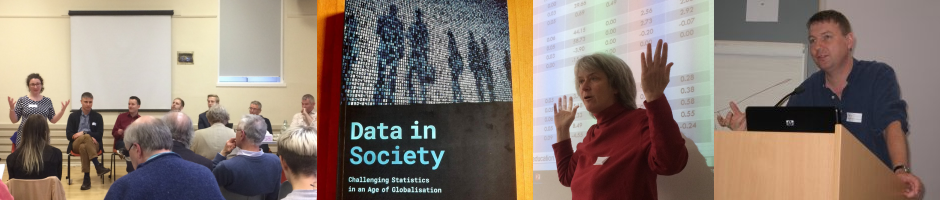
The Radical Statistics Annual Conference 2011, held at the newly opened Heart Centre in Leeds was very successful with a record attendance. There was a full programme of papers that focussed on the twin themes of the ongoing effects of the coalition’s financial cuts and the increasing influence of corporations. This issue [104] includes four of these conference presentations and two workshops based on the presentations.

One issue that has been a thorn in the side of many scientists at least since Simon Singh published his book on homeopathy (co-authored with Edzard Ernst) is litigation in the area of science criticism. Dr Peter Wilmshurst presented a harrowing and yet very humorous account of what began with his participation as principal cardiologist in a sponsored clinical trail. This involvement led to severe and painful disruption of his career and family life over three years, caused by extended legal action. His commitment to professional integrity left him victim to UK libel laws, and his case is not alone. There are other examples of scientists being sued for libel for scientific presentations and research publications. This should be a concern for scientists, statisticians and the public, restricting as it does scientific communication.

Speaking before Dr Wilmshurst, Stuart Parkinson, Executive Director Scientists for Global Responsibility, presented an analysis that anticipated the experiences reported by Peter Wilmshurst. He argued that, while links are increasing between business and science and
technology, there is growing evidence that the science commercialisation agenda brings with it a wide range of detrimental effects, including bias, conflicts of interest, a narrowing of the research agenda, and misrepresentation of research results. All of these can reduce the reliability of statistics based on scientific research. Stuart permits the reprint of an article dated 2009 presenting evidence for these effects across five sectors:  pharmaceuticals; tobacco; military/defence; oil and gas; and biotechnology. Recommendations are made for improving the openness, independence and reliability of
academic research.

The opening presentation was given by Jay Ginn and Susan Himmelweit. With illustrative charts they refuted the government’s claim that its measures to reduce the financial-sector-created deficit are designed to be ‘fair’, that is distributing the pain across the whole of society. Vulnerable groups were shown to be suffering the worst effects of the package of cuts and tax changes, particularly older people and women. The authors’ paper ‘Unkindest Cuts: the impact on older people’ has already been published in Radical Statistics #103;
this was covered in the presentation. The paper printed here covers the additional material without duplication.

Alan Franco spoke on his article published in #103, ‘From Witney to Wigan: How national changes to welfare benefit rules have a differential impact on local communities’. He presented further analysis that demonstrated that while significant cuts in the levels of welfare benefits and tax credits are typically portrayed as ‘targeting help on
those most in need’, a geographical analysis of their differential impact on communities suggests that significant disinvestment in Britain’s most impecunious communities is underway. Alan’s data can be retrieved from the website, but no paper is included.

A similar message was conveyed in Howard Reed’s presentation that showed that the poorer you are the more the cuts bite and vice versa, which is the opposite of what the government has claimed about them. The work carried out for the TUC by Horton, T. and Reed, H. ‘Where the Money Goes: How we benefit from public services’, cited by Ginn &
Himmelweit, is an invaluable source for evidence. Permission has been given to summarise Howard’s presentation and this will appear in Part II #105.

Victoria Johnson’s presentation on the redefinition of wealth and progress argued that it is impossible to have a growth economy indefinitely. She began with a thought experiment on a hamster eating and thereby growing – which if allowed to continue – would eventually outstrip the world’s food supply for it. A real experiment of this kind was carried out in the mid-20th century by an experimental psychologist, Teitelbaum. Upon ablation of a rat’s ventro-medial hypothalamus, he discovered that the rat ate until it became so large that it was unable to move to obtain food and eventually died of starvation. Both experiments, one conceptual the other real, show that indefinite growth leads to a community exceeding the carrying capacity of its environment with catastrophic consequences. A further upshot of developing a new attitude to growth is the necessity of reassessing the implications of population growth and its inextricable relationship to the carrying capacity of the earth.

At the end of the afternoon we broke up into groups to discuss what activities could be conducted between AGMs. Two of the workshops are presented here. One, led by Women’s Budget Group, considered the effectiveness of equality impact assessments (EIAs) of government policy on gender and other inequalities. The other, led by Dr Wilmshurst, examined how libel law operates in the UK and the implications. The workshop concluded with a call for support for the Libel Reform Campaign petition.

The editors hope to trace a report of the third workshop ‘Cuts to Government Social Research Budgets and Ongoing Projects since May 2010: Increasing the Evidence Deficit?’. This was led by Simon Tanner. Please let us know if you attended that one. Hopefully it could be reported in Part II #105 together with full records from the Annual
General Meeting that was held during the lunch break.

In addition to conference papers #104 includes several other items that have accumulated during the delay in publication. These include Jane Galbraith’s response to Danny Dorling’s reply in #103 and articles by Ecob, Marchant and Noble. Russell Ecob proposes an alternative proportional representation voting system and Paul Marchant questions whether new street lighting schemes have reduced crime in London. Hugh Noble’s commentary is designed to raise the level of discussion on the ‘Spirit Level’.
The Troika are given the last word reporting on recent decisions and offering promotional material for Radical Statistics.

Larry Brownstein
Alastair Greig
Janet Shapiro
editors@radstats.org.uk

Call for Submissions to Radical Statistics: the Riots

Issue #106 of Radical Statistics will focus on the 2011 England Riots. We are actively approaching individuals to submit analytical work for the issue. Articles can range in size, we actively encourage the use of empirical data, but also encourage short communications, letters, and full length articles.

The editors of Radical Statistics are looking for a range of submissions which will help analyse the response, or pretext, to the riots. A simple study on the convictions/sentencing of those participating would be very welcome indeed, but we are interested in receiving a range of submissions. If you would be interested, or know of someone who might be, please contact editors@radstats.org.uk.

See the Editor’s page on the website for details about submissions.

– Alastair Greig

After the Radstats conference: photos, data, presentations

AGM-Leeds

Radstats members read reports at the annual general meeting.

On Saturday 26th of March 2011, exactly one month before the March Against the Cuts in London, around 70 people gathered at the Heart Centre in Leeds for the Radical Statistics Group’s annual conference, AGM and workshops, galvanised by the conference theme, ‘Cuts and Corporations’.

Since then, most of the speakers have provided presentations for the website. Also, Alan Franco provided data files detailing the local area data he presented in “From Witney to Wigan: How national changes to welfare benefit rules have a differential impact on local communities.”

The spreadsheets include compiled comparisons by local authorities and by parliamentary constituencies of the impact of changes in the Disability Living Allowance, Tax Credit Reductions, and Child Benefit.

We also have some links to photos from our facebook account.

Check it out at https://www.radstats.org.uk/conf2011/index.htm

Radstats launches Critical Essay Competition 2011

woman writing in notebook

image by mezone on flickr

Submit an original essay that addresses a current social research/policy question with critical use & interpretation of relevant data sources (3,000 words max) by
1st July 2011.

First prize £ 60, Second prize £ 40 in national book tokens.

All essays will be published in the Radical Statistics journal. There are two categories; ‘student’ (undergraduate/postgraduate) and ‘open’ (any non-student).

More information on the Radical Statistics website: www.radstats.org.uk/essay

Print and post a flyer to help us advertise the competition.

Editorial: ‘The cuts’ (Radical Statistics issue 103)

From Radical Statistics 103, published November 2010. Available online: February 2011.Fat man leaning on thin man saying We're all having to  tighten our belts.

Since they came to power, the Coalition Government has been reshaping official statistics so as to tell a story. Part of that story is how Britain was brought to ruin. Over the past decade, economic growth in the UK has been driven by the accumulation of unsustainable levels of private sector debt and rising public sector debt. This pattern of unbalanced growth and excessive debt has helped create the exceptional economic and fiscal challenges that the Government must address …1

Part of the story is the attribution of responsibility for the problems to the public sector. Over the last decade, the UK’s economy became unbalanced, and relied on unsustainable public spending and rising levels of public debt. 2 Part is how welfare dependency has grown. We need to address the high and increasing costs of welfare dependency. There are now nearly five million working-age people receiving the main out-of-work benefits. 3

This leads to the conclusion that the deficit must be tackled by curbing dependency. The Spending Review makes choices. Particular focus has been given to reducing welfare costs and wasteful spending. 4

Radical Statistics has always been concerned at the extent to which official statistics reflect governmental rather than social purposes. At every stage of the narrative, the evidence has been distorted. The UK public debt, as a percentage of GDP is less than in Germany. France, the USA and in many periods of the UK‟s own history. The public debt was incurred, not because of the expansion of the public sector, but to save the banks, and the economy. The growth in benefit expenditure reflects the extension of entitlements for older people, increasing unemployment and responses to disability. The statistical presentation is often questionable. This extraordinary graph – the third circle is more than double the size of the first – comes from The State of the Nation, published by the Cabinet Office: claimants have increased by over 40% since 1997, from 1.2 million to 1.8 million.

circles showing increasing claimant numbers from 1997 to 2009

Figure 3.1: The numbers of working-age Disability Living Allowance claimants have increased by over 40% since 1997, from 1.2 million to 1.8 million

The government’s claim to be giving priority to deficit reduction is inconsistent with its limited emphasis on taxation. John Grieve Smith points to an alternative of increasing tax income, from VAT, income tax, inheritance tax and corporation tax, which has reduced in the UK from 33% to 28% during the time of the Labour administration.

Stewart Lansley cogently argues for action to limit the rising concentration of wealth at the top. This raises the concern that the central focus is not the reduction of the deficit, but rolling back the frontiers of the state. One aspect of the government strategy that is
hard to quantify is the privatisation of services (to those who can afford a profitable price). Radical Statistics has received a request from the public sector union UNISON for help with quantifying the impact on services of privatisation: please contact troika@radstats.org.uk with your willingness to work with them.

The papers in this special issue examine some of the key propositions in the government’s analysis. Stewart Lansley looks at the history of the crash; John Grieve Smith and Richard Exell, at the economics and the public sector; and Paul Spicker at spending on welfare. Other papers are concerned with the impact of these measures on the people they affect: Tim Horton and Howard Reed consider the distributional implications of the cuts, Alan Franco the local impact of benefit cuts, Jay Ginn pensions and support for older people, and Robert Moore the effects on Wales.

Paul Spicker and Ludi Simpson, Guest Editors

Footnotes:
1 HM Treasury (2010) Budget 2010, HC61, http://www.hmtreasury.gov.uk/d/junebudget_complete.pdf
2 Cm 7942 (2010) Spending Review 2010, London: HM Treasury, p 6
3 Cm 7913 (2010) 21st Century Welfare, London: DWP, p 4.
4 Spending Review 2010

Cuts & Corporations: Radstats Conference

Cuts and Corporations is the theme of the 2011 Radical Statistics conference in Leeds on Saturday 26, February.

Unkindest Cuts: Analysing the effects by gender and age
Jay Ginn & Susan Himmelweit

From Tatton to Tameside: How national changes to welfare benefit rules have a differential impact on local communities
Alan Franco

Distributional Impact of the 2010 Spending Review
Howard Reed

Detrimental effects of corporate influence on science and technology
Stuart Parkinson

Effects of the libel laws on science
Peter Wilmshurst

Redefining wealth, redefining progress
Victoria Johnson

Activity workshops
Libel in science / Indicators of social progress / Cuts in statistics / Impacts on inequalities

Visit the conference site for booking, programme, social events, map and accommodation.

Radical Statistics Issue 101 (2010) – Editorial

Welcome to Radical Statistics Issue 101. The editors thank authors for the contributions in this miscellaneous issue; there is no specific theme but you will find the usual critical analysis and comment.

Fernando De Maio revisits the earlier writings of Engels and Virchow, who identified social conditions as the major determinants of health and argued strongly for the relief of poverty and improved living conditions. He notes the link with current researchers; they may not be preaching revolution but are still arguing for policy change in order to reduce health inequalities.

Here in the UK, various systems of voting are being compared for effective voter representation, so the article by Don Kerr and Hugh Mellon explaining the Canadian system is topical. They question whether the system is robust in the face of increasing population drift to the cities in Canada. A comment follows by Ludi Simpson, who has written on immigration and population growth in issues 99 & 100. Ludi doubts whether population drift to cities will lead to disproportionate representation in the UK.

The next issue, expected to be out before the end of the summer, will present articles from the 2010 Annual Conference – ‘Whose Statistics?’. However, because it was presented promptly, Harvey Goldstein’s article is included here together with two commentaries on the conference.

Harvey argues that statisticians should use the most powerful techniques available, particularly for hierarchical systems that display complexity; he claims that it is unprofessional for statisticians to condone drawing conclusions from an overly simplistic analysis. He justifies the need for an ethical approach by quoting discussions on the validity of school league tables.

Two contributors, Christian Hennig and John Urquhart, present their own personal views on the 2010 annual conference and substance of the debate. We also have book reviews by Alex Lea and Jane Galbraith. Contributions of this sort are very welcome and often stimulate further discussion. Please inundate the editors with your writings!

Janet Shapiro
Jane Galbraith
Bob Sanders
editors@radstats.org.uk

Radstats 2011 Conference: Cuts & Corporations

All are welcome at Radical Statistics conference: ‘Cuts and Corporations’
Saturday, February 26th 2011, Leeds.

– Alan Franco of Tameside Council, Jay Ginn and Howard Reed on statistics of the cuts and their impact.
– Stuart Parkinson of Scientists for Global Responsibility on corporate influence on science and technology
– Peter Wilmshurst on libel laws on science
– Victoria Johnson of the New Economics Foundation on redefining wealth and progress
– Workshops and lots, lots more

The conference fee is minimal, to encourage all interested in the politics of statistics, whether professional or campaigning or from personal interest.

Full programme and booking form at https://www.radstats.org.uk/conf2011/index.htm

Please circulate to colleagues, friends, networks and lists. Please print the programme to display at work.